Narracje Festival, Gdańsk · Projection-mapped live installation
Narracje Festival: Real-time projection-mapped audiovisual installation
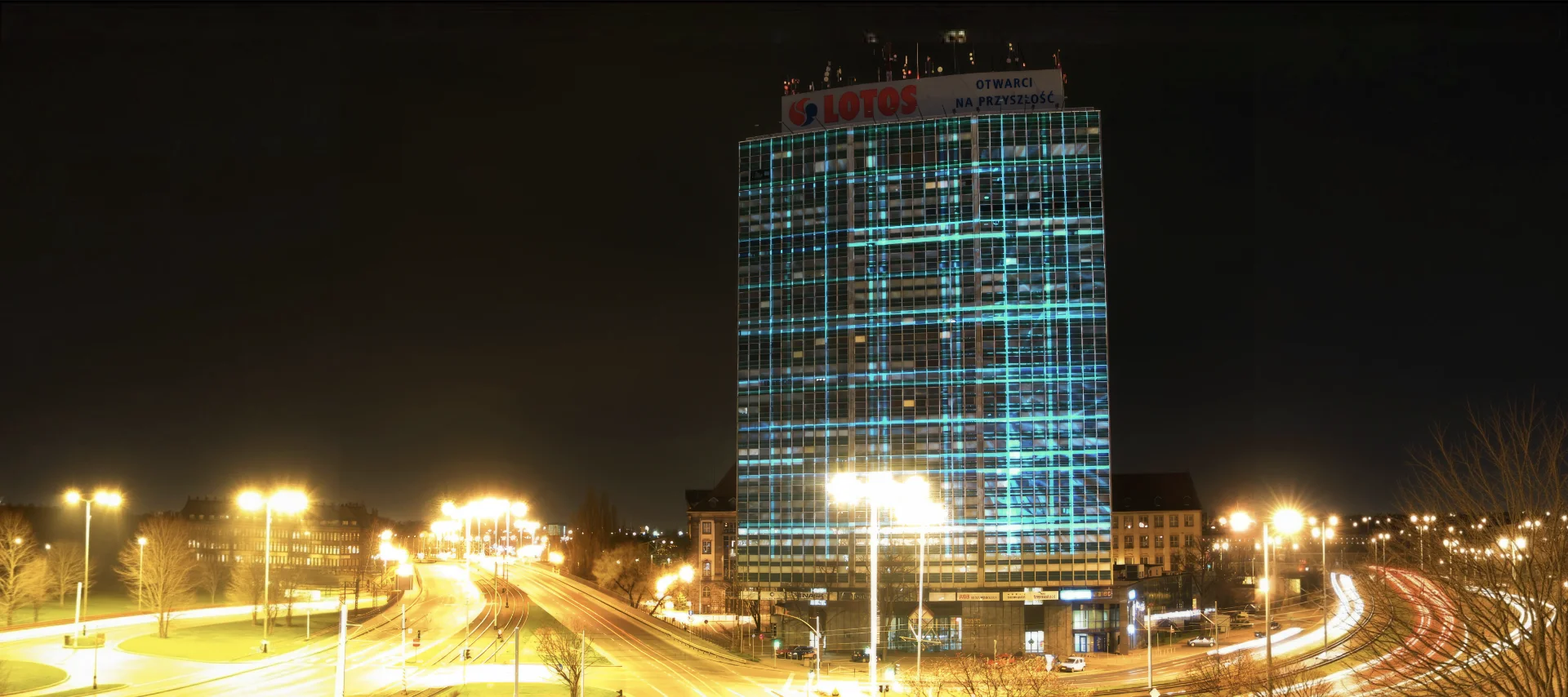
Designing and performing a real-time sound-reactive light sculpture on a 56 x 72 metre building facade, as part of the Narracje Festival in Gdańsk, across three live evenings in November 2009.
01 / Setting
A building beside the birthplace of Solidarity.
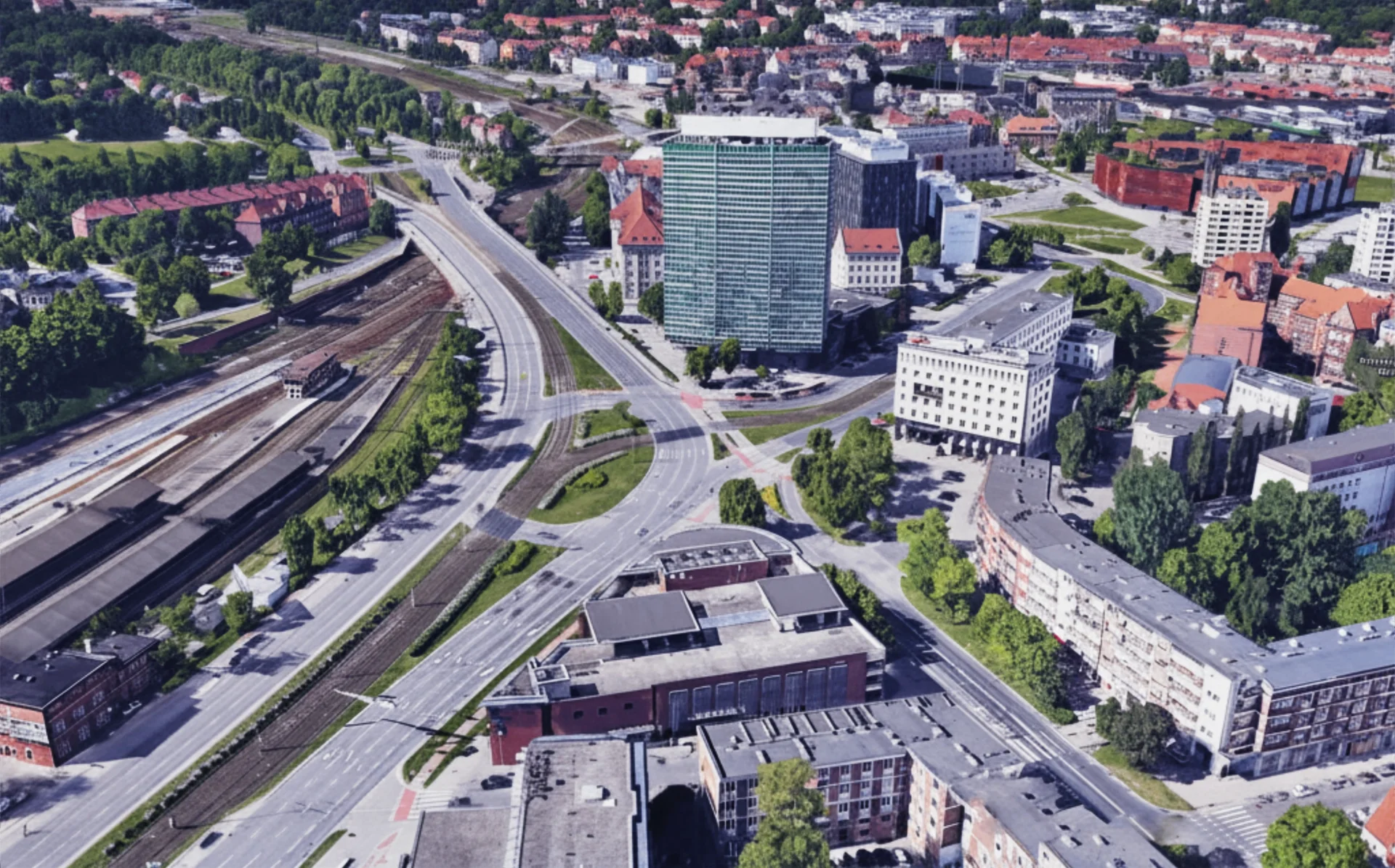
The Narracje Festival turns the streets of Gdańsk into an after-dark gallery, siting light and projection works across the city for visitors to discover on foot. For the 2009 edition our canvas was a large modernist building in the historic shipyard district, a few steps from the gate where the Solidarity movement began.
The location carried its own weight. Working at that scale, beside a place of real political memory, meant the piece had to feel considered rather than decorative. The building itself, tall and heavily detailed, became both the subject and the screen.
02 / Collaboration
Splitting the work between sound and image.
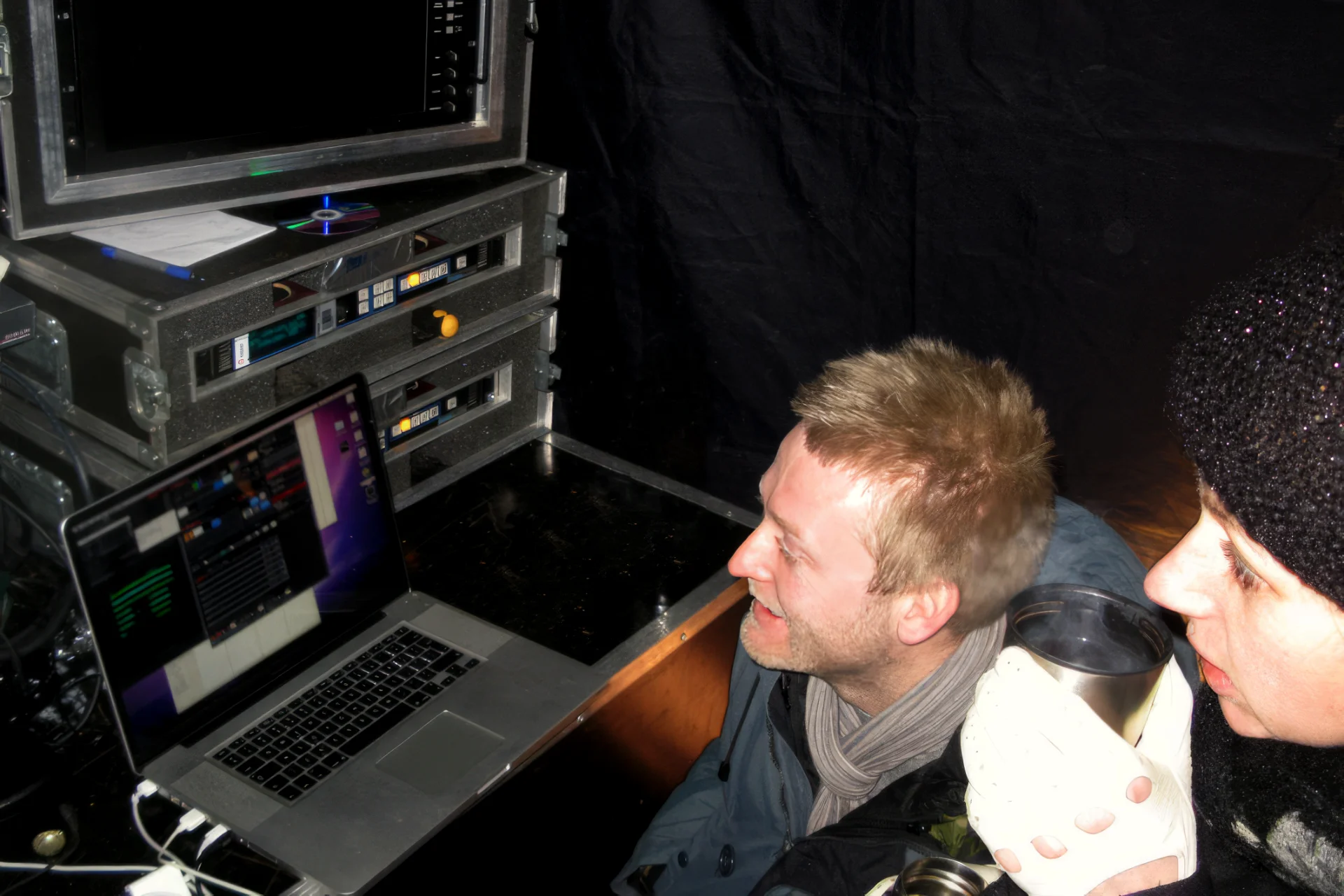
I worked with artist Dorota Walentynowicz, dividing the piece cleanly between sound and image. She shaped the audio composition in Ableton Live while I built and performed the visual system in VDMX, the two running in sync so that what you heard and what you saw were the same signal read two ways.
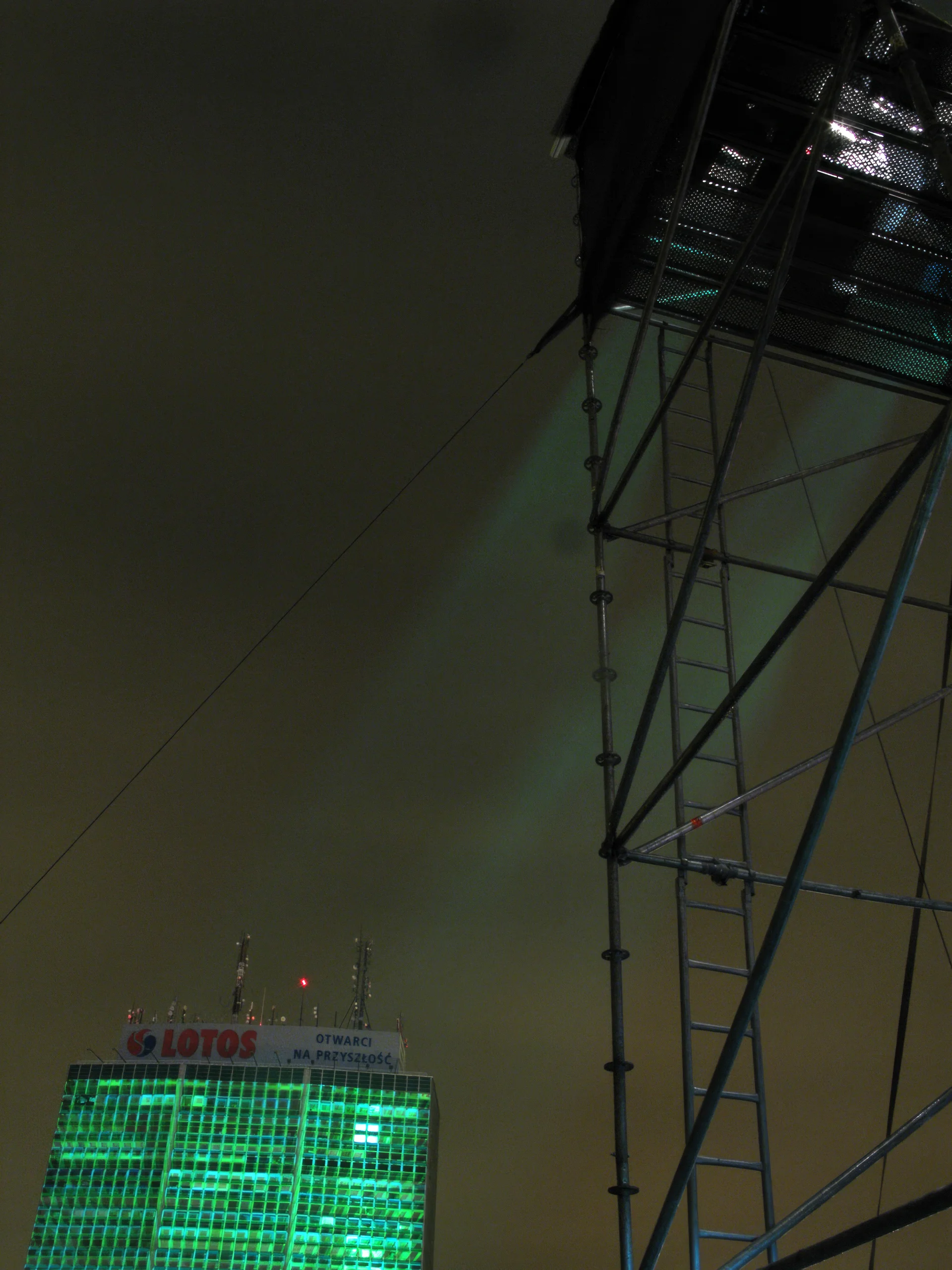
That separation let each of us push our own craft without compromise, then meet in performance. The set up ran from a temporary control position with a clear sightline to the facade, so the mapping could be adjusted live against what the building was actually doing under projection.
03 / The Surface
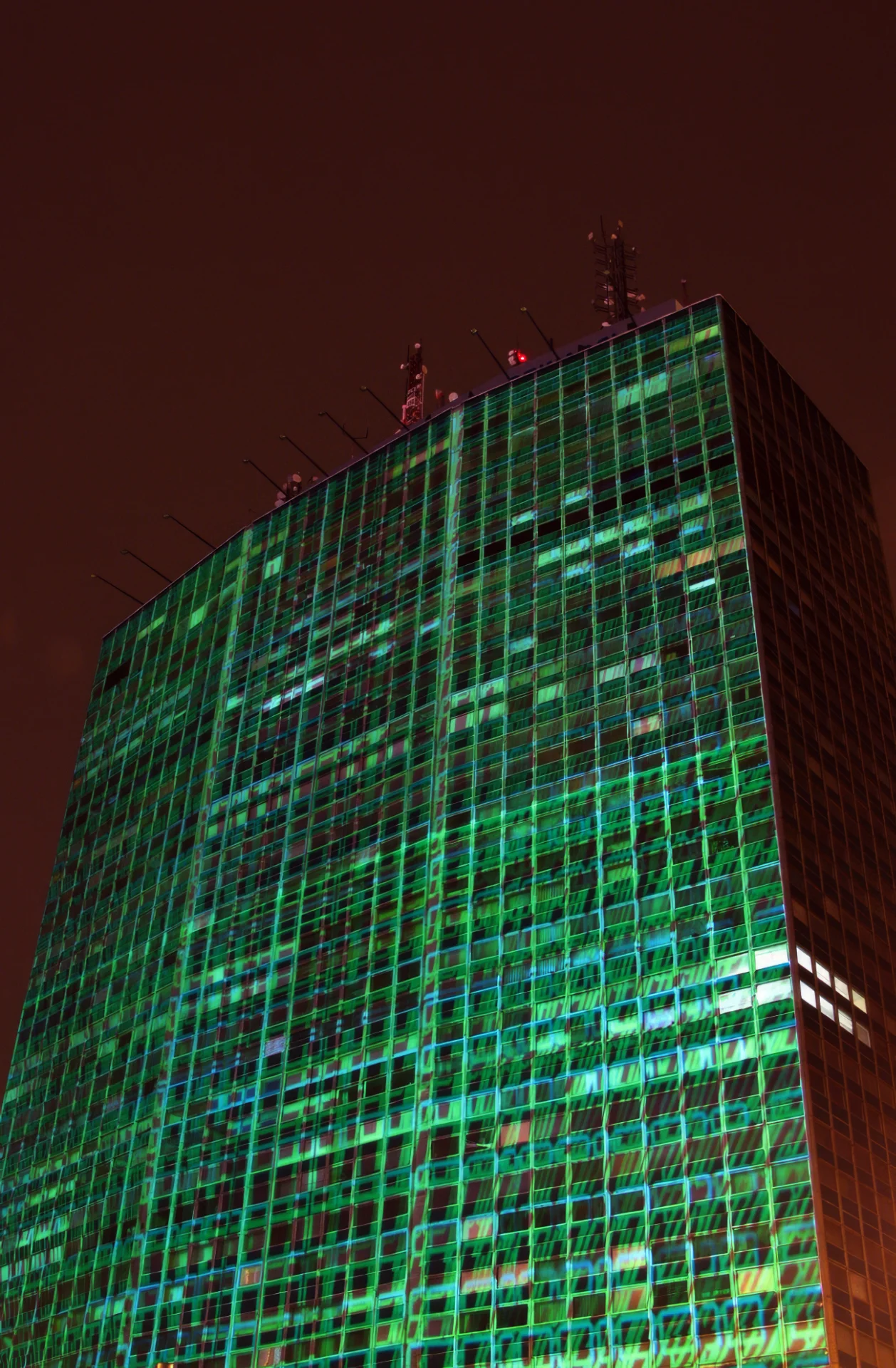
72 metres tall, 56 metres wide, nothing flat about it.
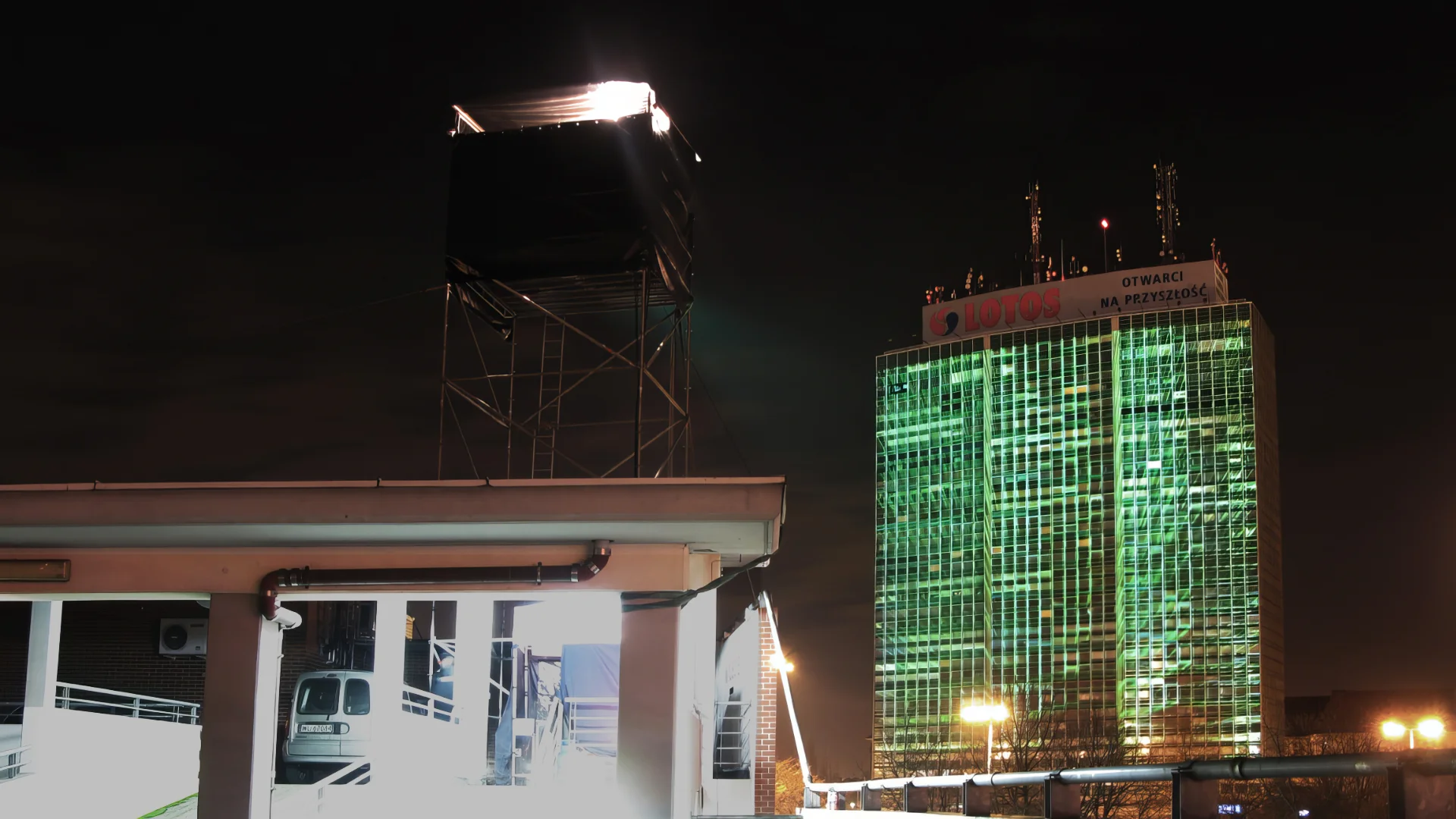
The facade measured roughly 56 metres wide by 72 metres tall, and almost none of it was flat. Window reveals, balconies, structural ribs and service runs all caught the light differently, so a projection treated as a single flat rectangle would have fallen apart the moment it hit the surface.
Mapping the building meant tracing its real geometry and letting the architecture become part of the image, with content built to sit inside the grid the building already gave us rather than fight it.
04 / Technical Approach
A system that listened before it responded.
The sculpture was sound-reactive in the literal sense. Audio analysis drove the visuals in real time, with amplitude and frequency bands mapped to movement, brightness and the way forms travelled across the facade, so the image was always a response to the sound rather than a video playing alongside it.
Building it this way meant the performance could breathe. Rather than triggering fixed clips, I played the system, shaping how strongly it reacted across each evening and steering the piece as a live instrument.
05 / Performance
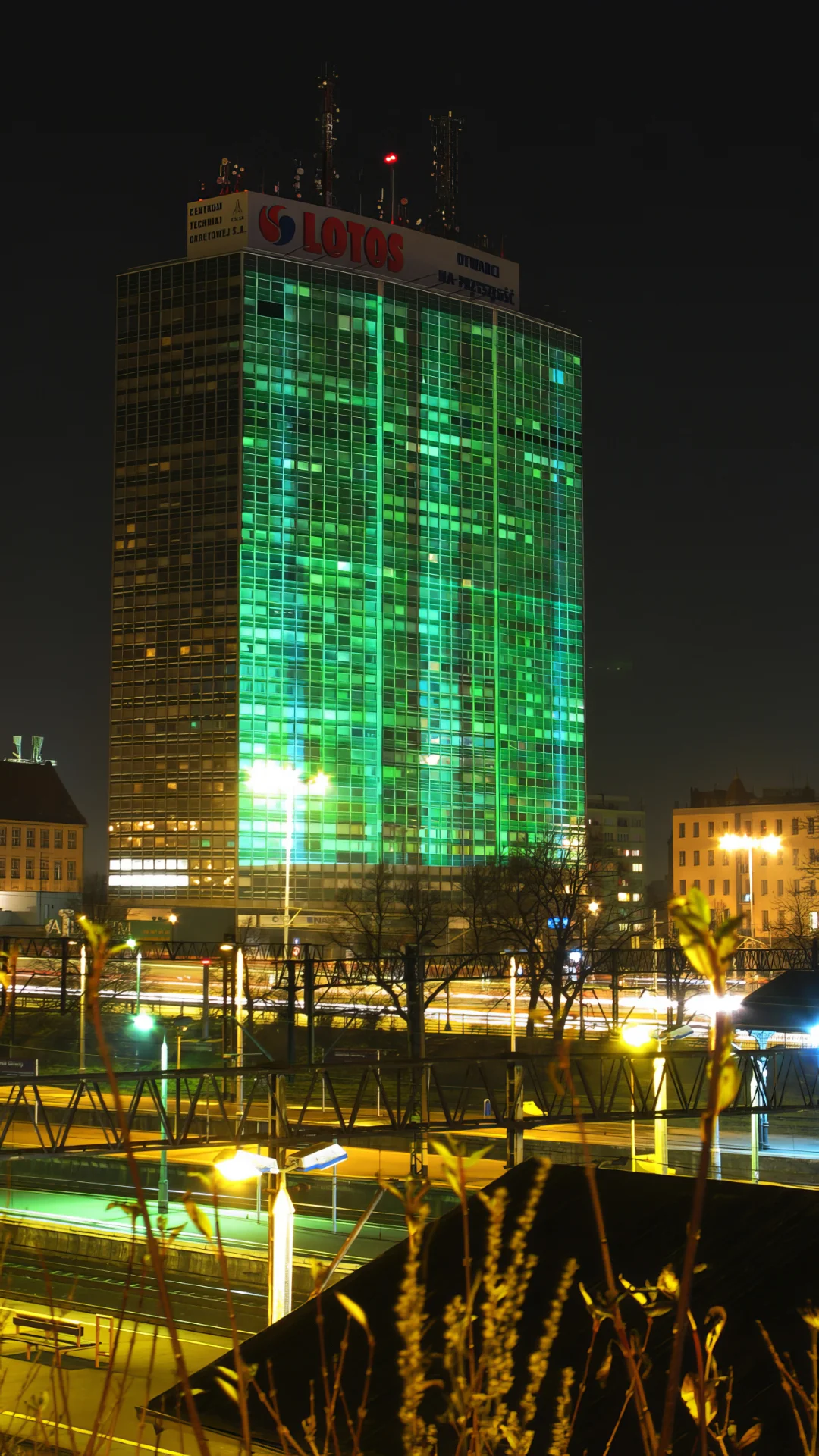
Three evenings, one (partially) snowy finale.
The installation ran across three evenings in November 2009. Each night drew a steady stream of festival-goers moving between works, and the building held its own as one of the larger pieces on the trail.
The final evening added an unplanned collaborator. Snow began to fall partway through, drifting through the projection beam and softening the image as it landed on the facade, an ending no rehearsal could have produced.
06 / Documentation
Watch the installation.
07 / Reflection
The biggest canvas, and the most unforgiving.
It remains one of the largest surfaces I have worked on, and one of the least forgiving. At that scale every decision is public and immediate, and there is nowhere for a weak idea to hide. The constraints of the building, far from limiting the work, gave it its discipline.
The collaboration begun here continued well beyond it. The YUVA project that grew out of this work carried on until 2013, refining the same approach of treating architecture, sound and real-time image as a single performable system.