Bruichladdich · Educational product design
Bruichladdich Dram Tray
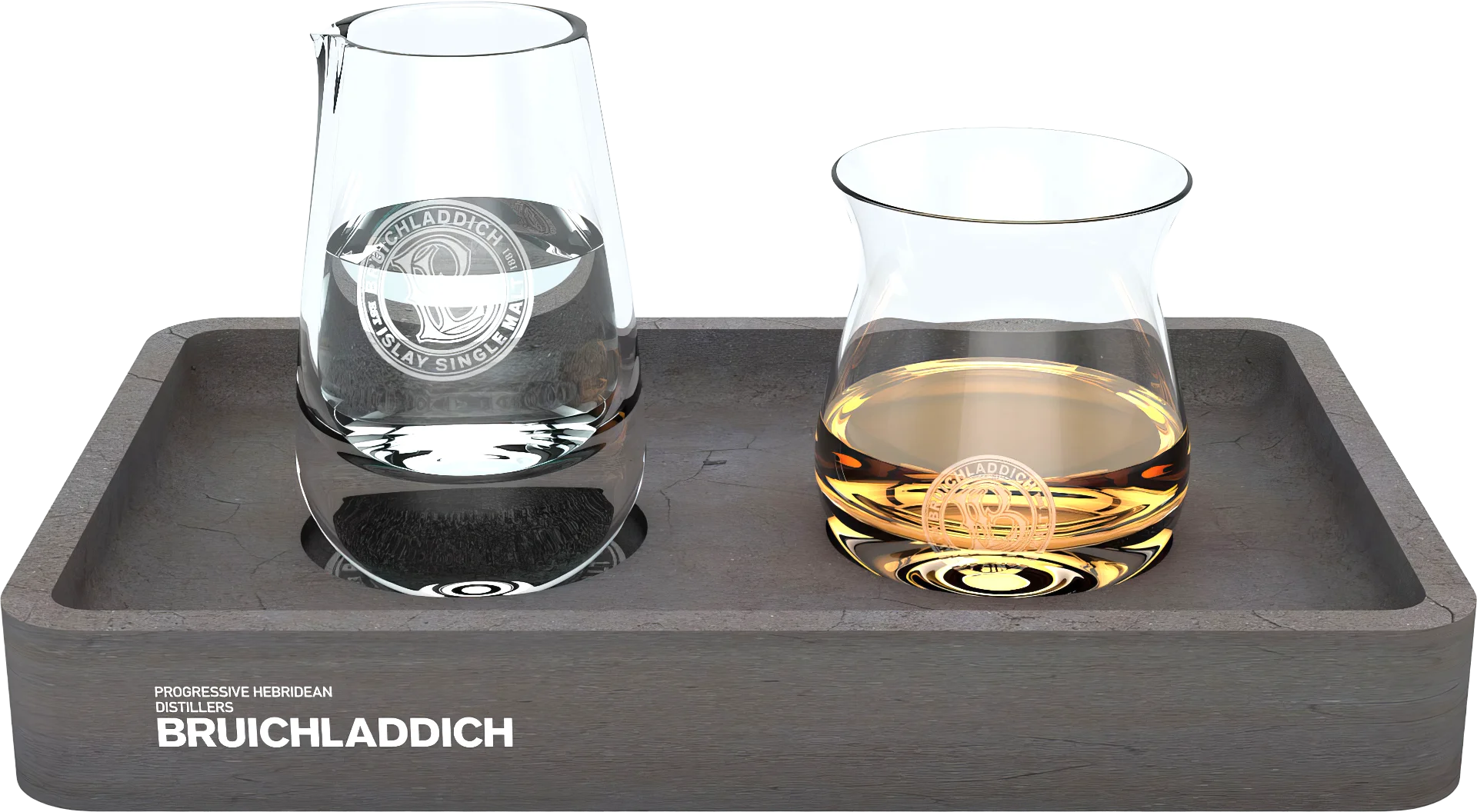
A hospitality product designed to change one specific behaviour: getting cask strength whisky drinkers to add water. From Cinema 4D file to plaster mould to pad-printed papercrete, trialled across high-end hotels in Tokyo.
01 / The Problem
A behaviour change problem, not a branding exercise.
The real brief was behavioural, not decorative. Cask-strength whisky opens up when a measured amount of water is added, but most drinkers either don’t know that or don’t do it. The job was to get people to add water at the point of serving, and to make that feel like the right, premium thing to do rather than a correction.
The answer had to work in hospitality, in the moment a dram is poured. So it was a behaviour-change problem solved with an object, not a logo exercise.

02 / A Measured Argument
68.5% ABV
Cask Strength
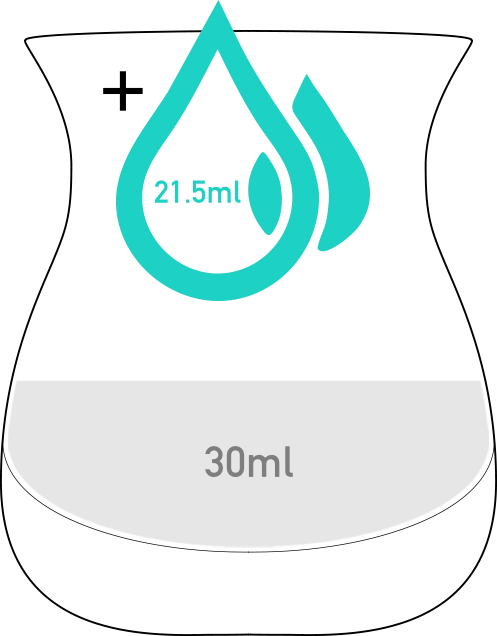
30ml whisky (68.5%) + 21.5ml water
= 40% ABV
A measured argument.
The object makes a precise argument. Cask-strength whisky sits at around 68.5% ABV. Adding roughly 21.5ml of water to a 30ml dram brings it to about 40% ABV, the point at which the aromas open up.
The tray embodies and prompts that measured ritual, turning a piece of insider knowledge into a serving gesture anyone can follow.
03 / Process
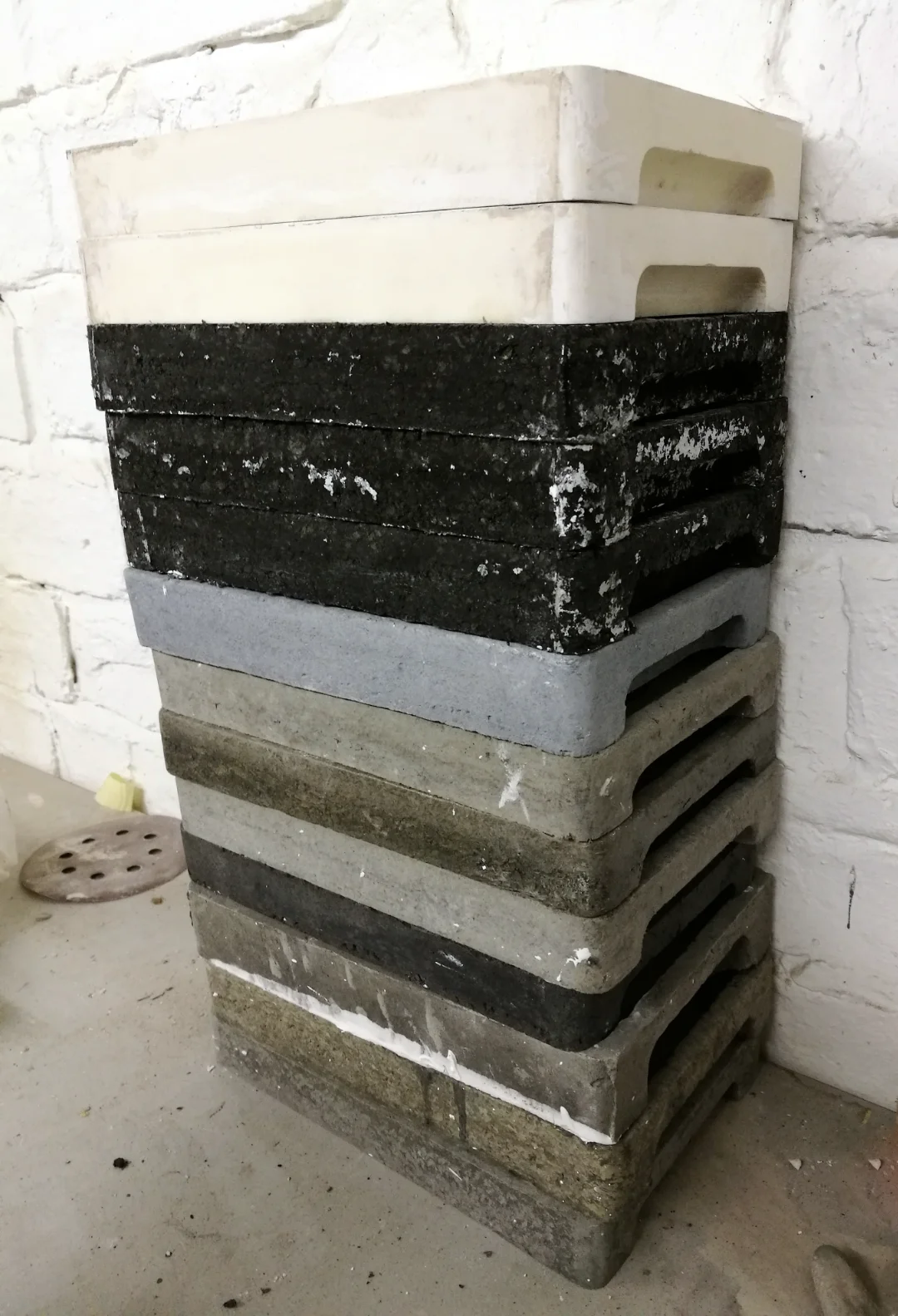
From digital file to finished physical object.
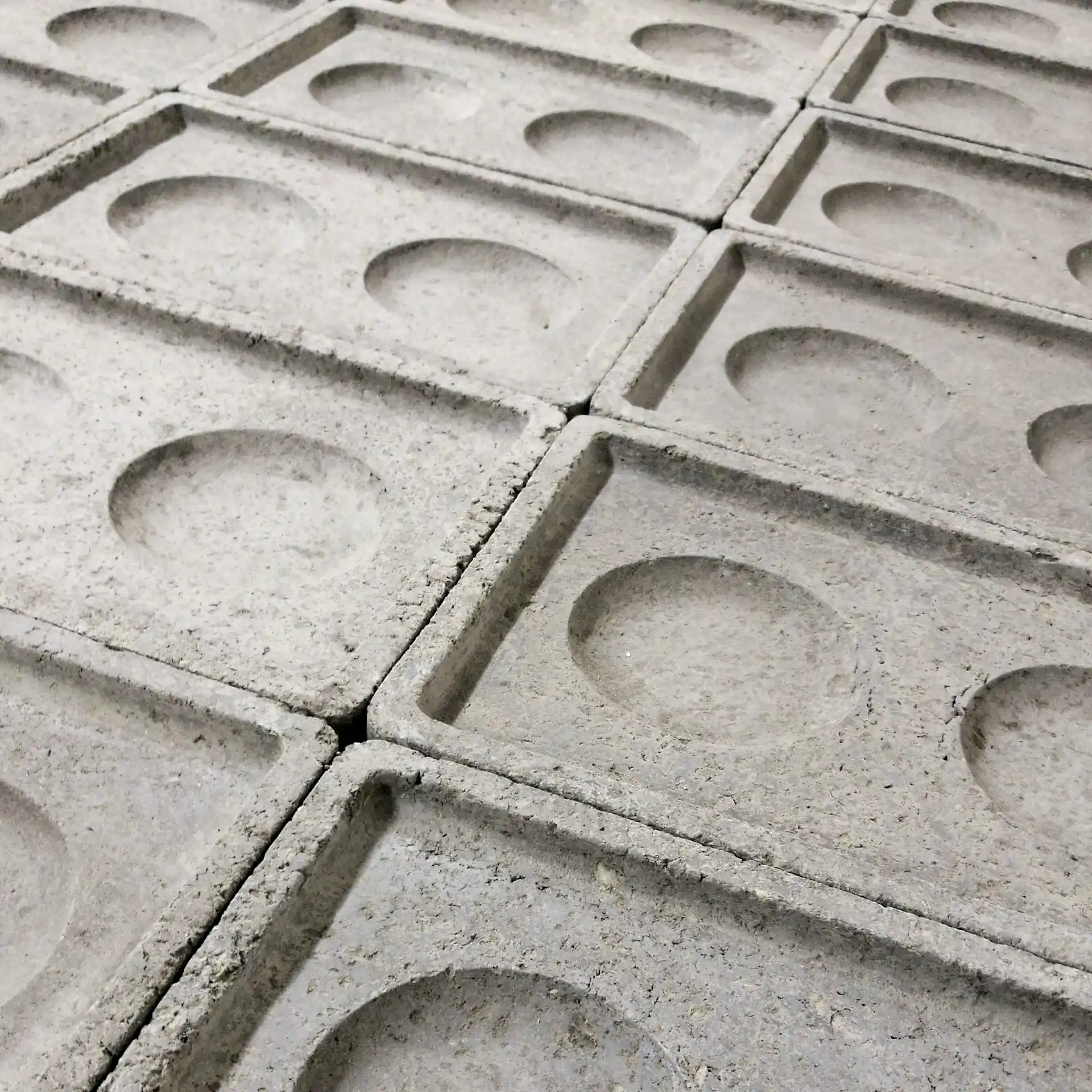
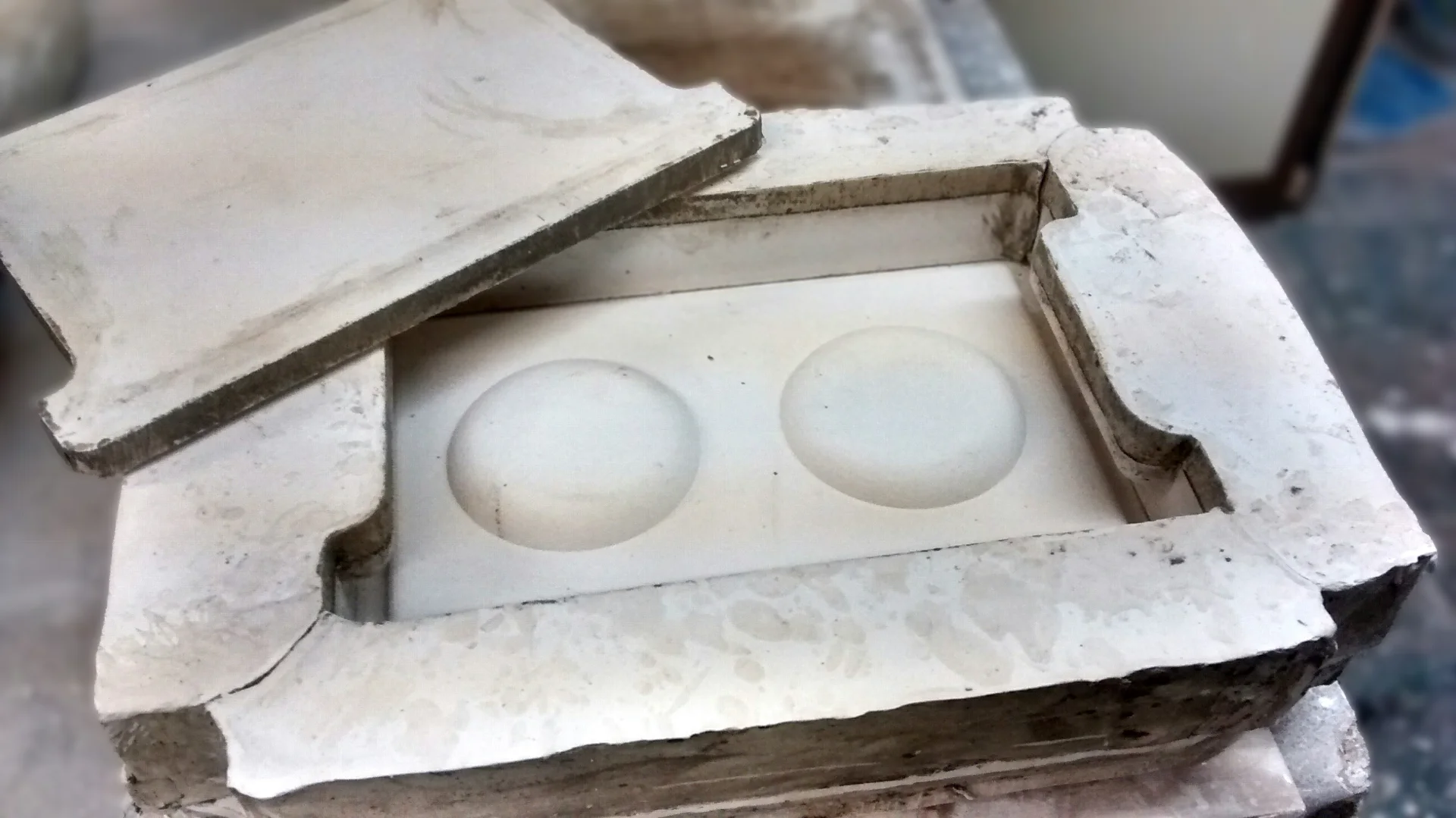
From file to mould – The tray was designed in Cinema 4D and exported as an STL. From that file, a CNC machine cut a foam positive, the exact form of the final object. That positive was used to create a plaster mould.
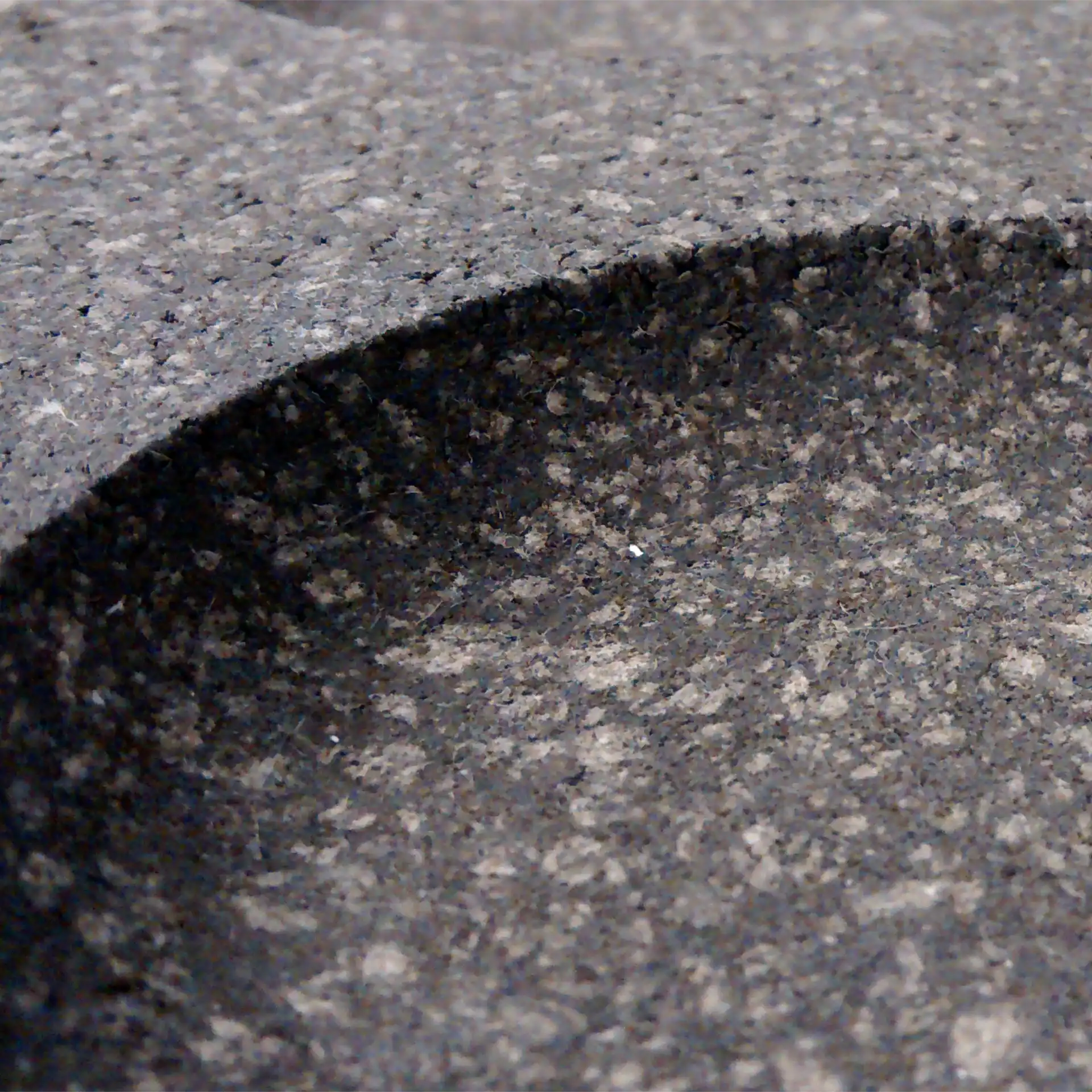
Material trials – Working with Glasgow fabricator Altronix, we ran extensive trials across several variables simultaneously: paper type and fibre composition, papercrete mix consistency, curing time, and non-toxic concrete dye concentration to achieve the target colour. Twenty prototypes were produced before a production specification was agreed.
Pad printing – The tray features two medallions, a Bruichladdich distillery seal and a Release Aromas water drop mark, set into recessed surfaces on the face of the tray. Standard printing methods don’t work on uneven surfaces. Pad printing does: a silicone pad picks up the ink from a flat plate and conforms to the contour as it presses down, transferring a clean image into the recess. The Bruichladdich wordmark was applied to the tray’s side edge using the same method.
04 / Material as Message
Material as message.
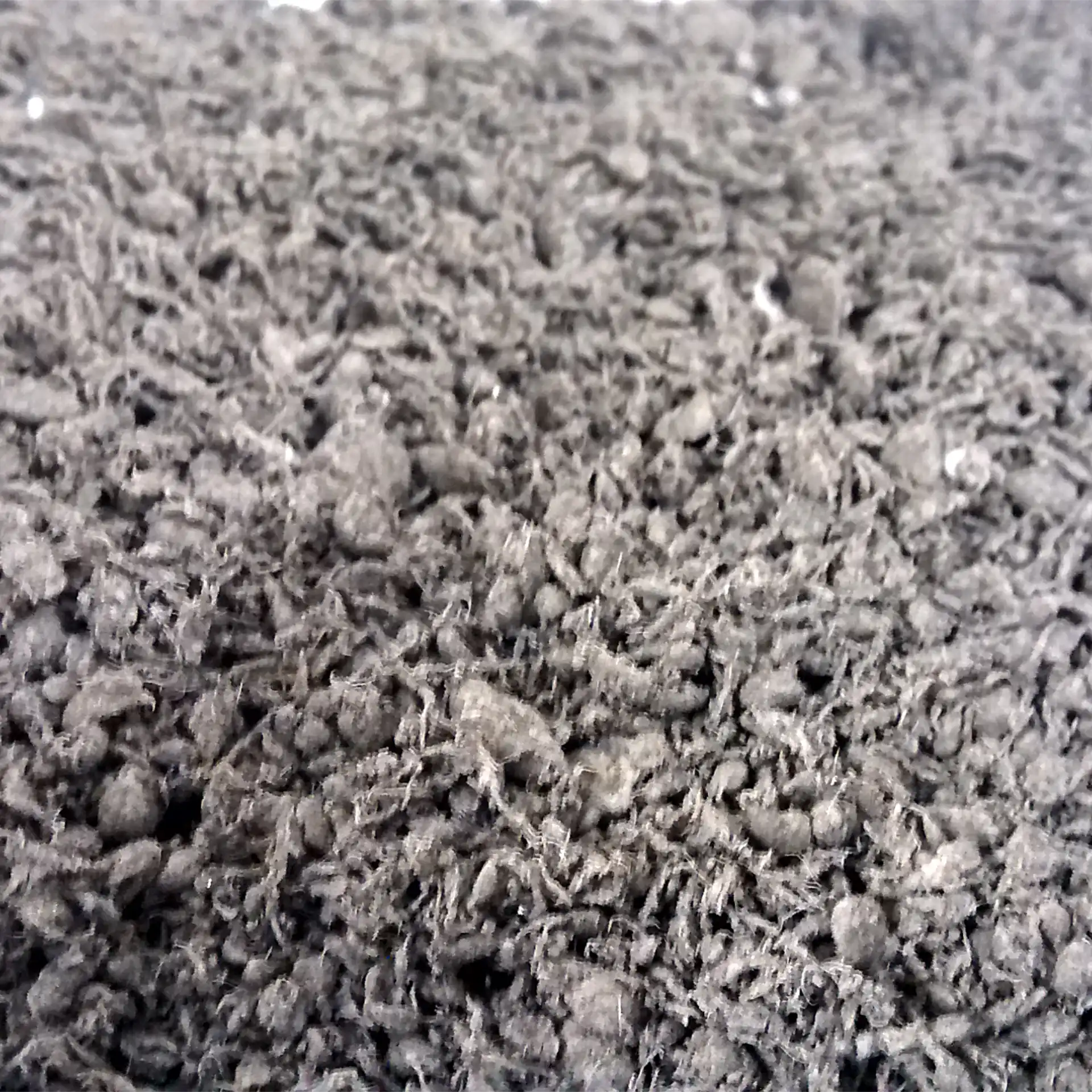
The papercrete was chosen deliberately. In a high-end hotel room context it reads as considered and material-led rather than corporate. The texture is visible. It has weight. It doesn’t look like a branded gift. A ceramic or lacquered tray would have said nothing. This one says something before anyone picks up a glass.
The tray is sized for a dram glass and a water jug. The format carries the argument without words: everything needed to add water is already on the tray, in the right proportion, ready to use.
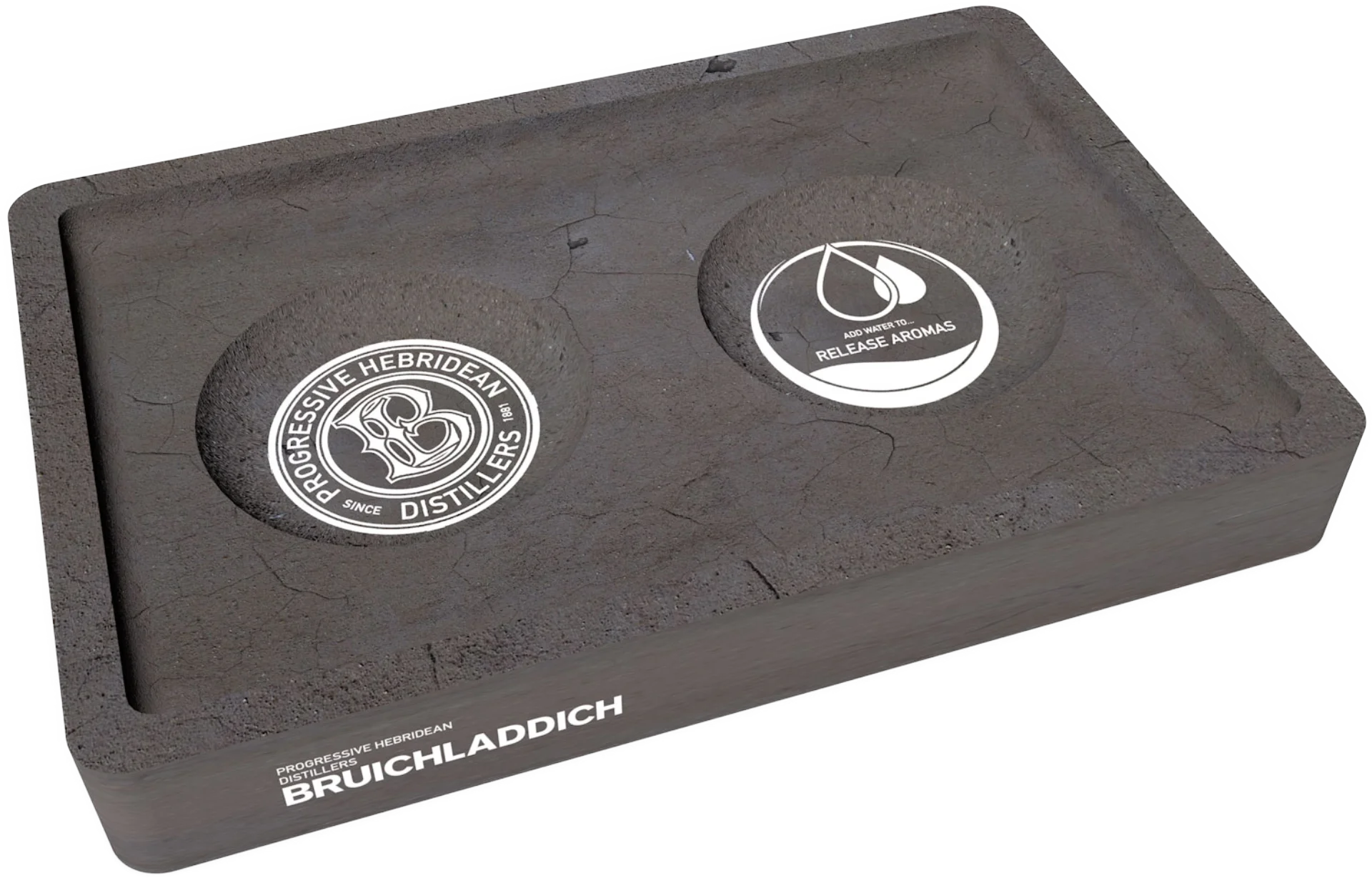
The two medallions on the face of the tray reinforce the message at close range. The Bruichladdich distillery seal grounds it in provenance. The “Release Aromas” water drop mark makes the instruction part of the object rather than something printed on a card and left on the side. Both sit in recessed surfaces, which is why pad printing was required, and why the finish reads as intentional rather than applied.
The papercrete itself is made partly from paper fibre, which gives it a texture that sits somewhere between concrete and card. It is lighter than it looks and warmer to the touch than stone. That quality matters in a hospitality context where the object will be handled. Two production copies were retained.
05 / Reflection
Twenty prototypes, one city.
The 20 prototypes were distributed across several high-end hotels in Tokyo as part of a targeted APAC hospitality programme led by the Bruichladdich brand ambassador. Tokyo was a deliberate choice, the Japanese whisky market is sophisticated, engaged with provenance, and attentive to how a product is presented. It was the right environment to test whether the object could do its job without explanation.
The programme was designed to operate quietly. No formal feedback mechanism was put in place, and no structured outcomes were captured. The tray was placed in context and left to work. Whether that represented a limitation of the programme or simply reflected how hospitality activations of this kind tend to operate, the object itself remains the record of what was built and why.