Premium DTC ecommerce · Rémy Cointreau
Nine years as digital experience designer on The Botanist, a super-premium Islay gin within the Rémy Cointreau portfolio.
01 / Context
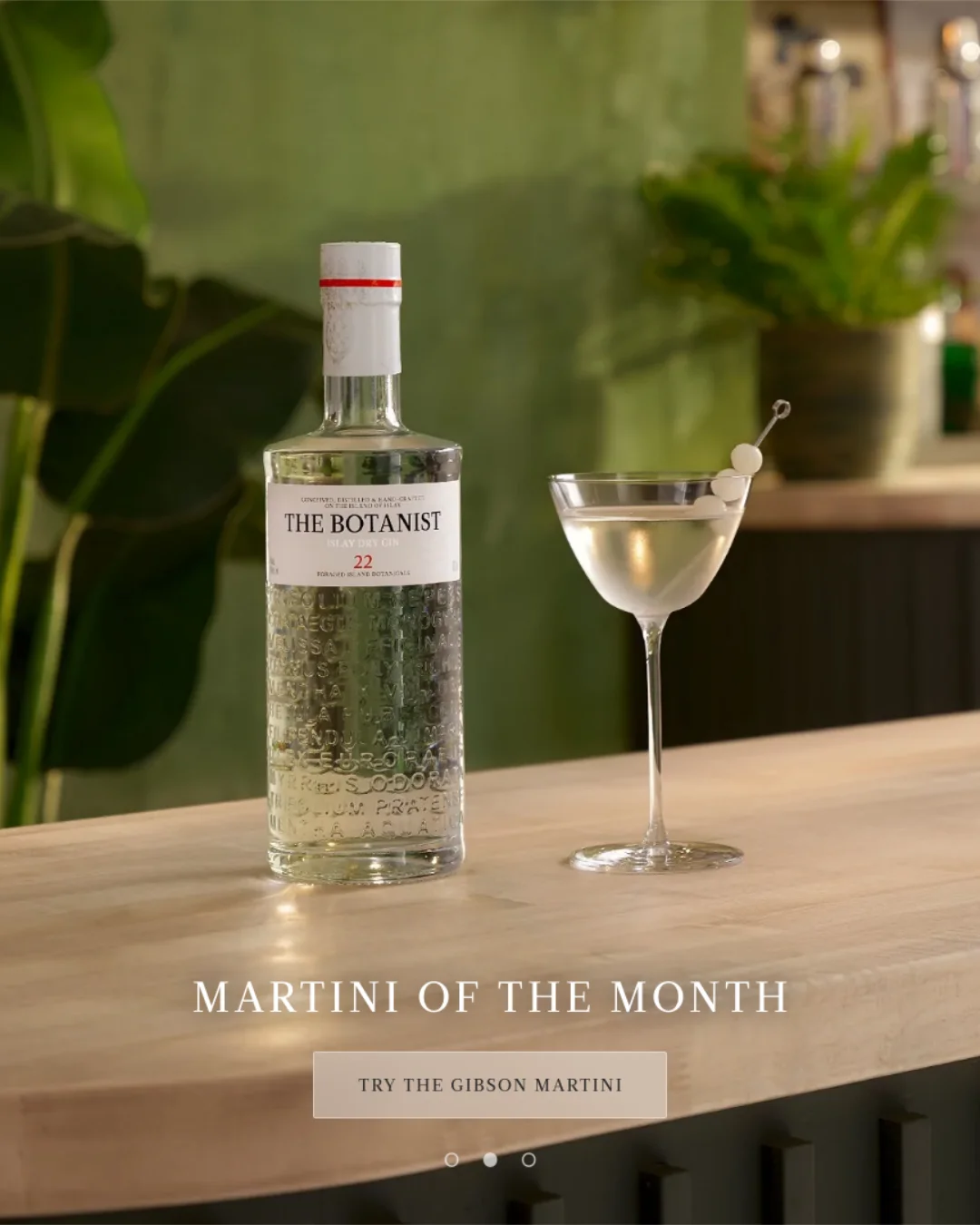
An Islay gin with a mixology habit.
The Botanist is the only gin distilled on Islay, made with 22 hand-foraged island botanicals layered over a core of nine classic ones. It sits within Rémy Cointreau alongside Bruichladdich, Port Charlotte and Octomore, but it is its own brand with its own audience: a younger, cocktail-led, design-literate drinker who meets the brand as often in a glass as on a shelf.
That changed what the website had to do. Where the whisky brands sell provenance and rarity, The Botanist sells use — foraging, seasonality, and the cocktail as the primary product surface. The commerce job was to make a bottle of gin feel like the start of something rather than the end of a purchase.
Three platforms in nine years.
Like the wider group, The Botanist outgrew its stack more than once. Each rebuild changed what I owned and how the brand expressed itself in commerce.
-
One
Drupal Commerce: agency-built
The first site was an agency-built Drupal Commerce platform. It established the brand online but was rigid to change: every campaign, cocktail or seasonal moment was a developer ticket, and the editorial rhythm the brand needed simply wasn’t possible at the pace marketing wanted.
-
Two
WooCommerce: designed, built and maintained by me
I rebuilt the site ground-up on WordPress and WooCommerce, and then ran it. Design, build, and day-to-day maintenance sat with me, which meant the cocktail content, news rhythm and PDP experiments could ship continuously instead of in quarterly releases. This is where most of the work shown below was made.
-
Three
Shopify Plus: agency-built, my supervision
When Rémy Cointreau mandated Shopify Plus across the group, The Botanist moved with it. An external agency built the theme; I supervised against the design system shared with the whisky brands, protecting the cocktail-led IA and editorial patterns through the migration so the brand’s distinct voice survived the consolidation.
03 / Information architecture
Cocktail-led information architecture.
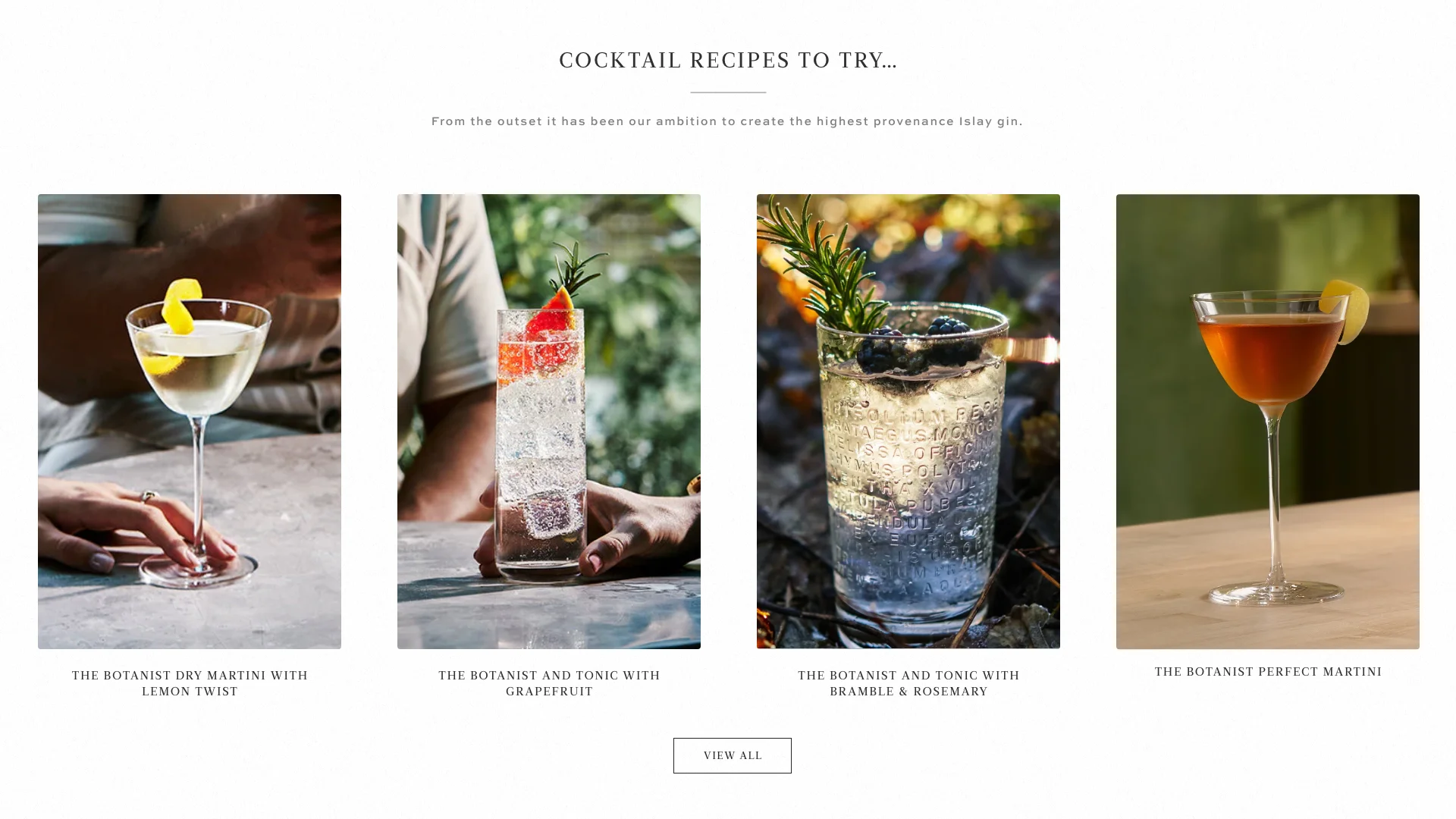
Most spirits sites lead with the bottle. The Botanist leads with the drink. I built the information architecture around cocktails and foraging as the primary entry points, with the product range reachable from within that world rather than sitting above it. A visitor arriving for a Foraged Negroni recipe is two clicks from the bottle that makes it, and the cocktail listing page does the merchandising job a category grid usually does.
Each cocktail is a content type in its own right: ingredients, method, the botanicals it leans on, and the seasonal note that makes it feel current. The CLP (cocktail listing page) is filterable by occasion, season and base serve, so the site behaves like a recipe destination that happens to sell gin.
04 / Editorial
Editorial rhythm on the news landing page.
A cocktail-led brand has to feel alive. The news landing page was designed as an editorial surface with a deliberate rhythm: seasonal foraging features, bartender collaborations, festival coverage and new-serve launches, mixed so the page rewards regular return visits rather than reading as a press archive.
The layout alternates feature scale and supporting items so the eye keeps moving, and the whole grid is built to be maintained by the marketing team without a developer — the same self-sufficiency principle that justified the WooCommerce build.
05 / PDP
Product variation UX on the PDP.
The Botanist range extends beyond the signature Islay Dry Gin into limited and seasonal expressions, gift formats and serve bundles. The PDP had to handle variation — format, gift options, and serve add-ons — without collapsing into a cluttered configurator. I designed the variation UX as a calm, progressive set of choices that keeps the bottle and the campaign creative in view while the customer builds their order.
The background creative carries the brand’s foraged, botanical world so the page reads as an experience rather than a form, with the commerce controls layered cleanly over the top.
06 / Cocktail recipe template
Cocktail recipes.
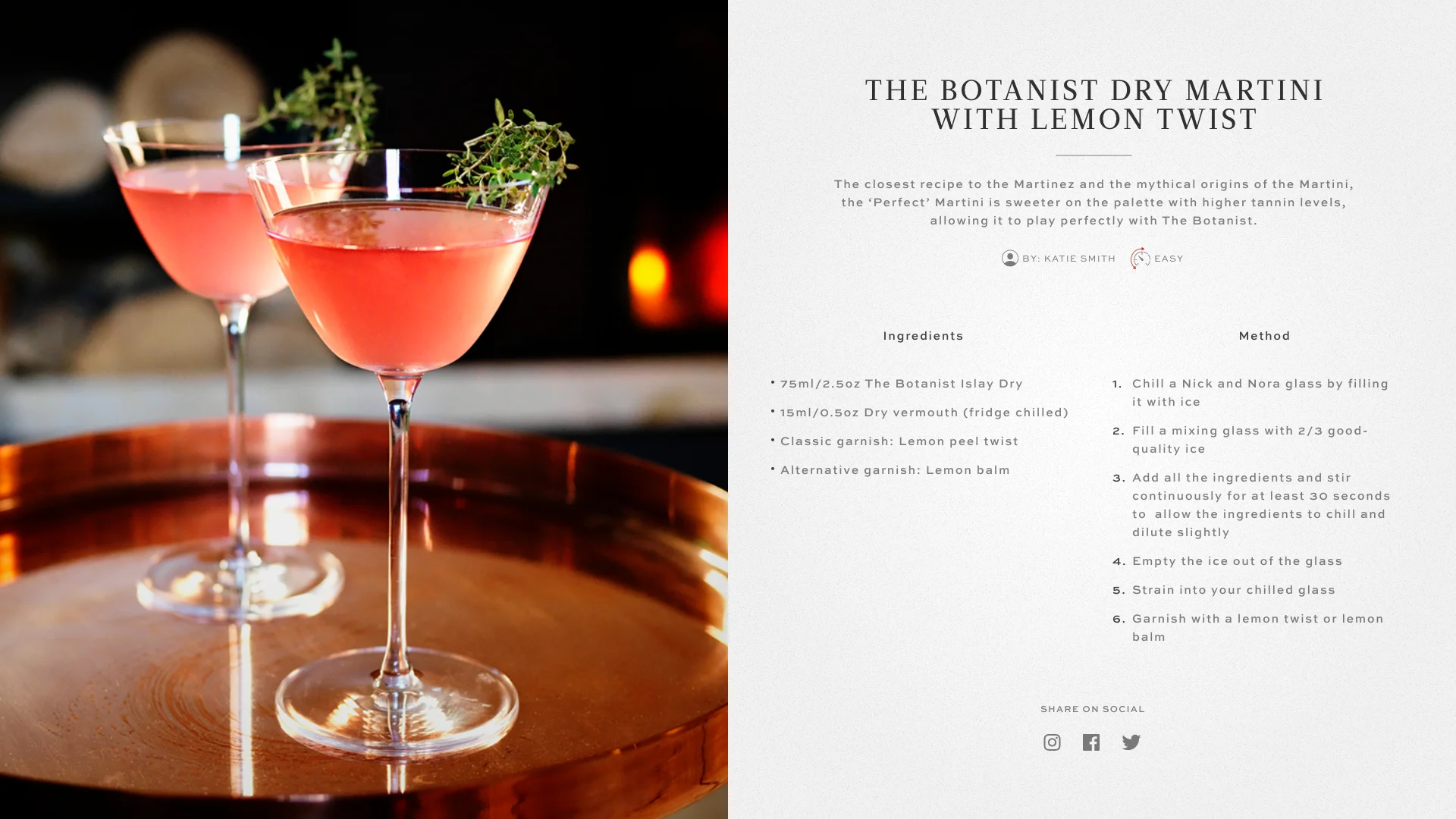
The cocktail recipe template is the workhorse of the site. I designed a two-column layout that keeps the finished-serve photography alongside the method, so a customer can read and make at the same time without scrolling back and forth. Ingredients link through to the gin and to any other Botanist serves they appear in, turning every recipe into a quiet merchandising surface.
The template scales from a three-ingredient highball to a complex foraged build, and reflows to a single, photography-led column on mobile where most cocktail reading actually happens.
07 / Interactive 3D
Discover the Taste of the Wild campaign interactive.
For the Taste of the Wild campaign I built an interactive 3D bottle that let visitors rotate The Botanist and explore its foraged botanicals up close — a campaign centrepiece that doubled as a product surface, bringing the label finishes and botanical illustration into a space photography couldn’t reach.
It sat at the heart of the campaign landing experience, with the botanical photography carrying the brand world around it.
08 / Across the brand
Across the wider brand; beyond digital.
The Botanist’s sustainability and foraging story extends past the screen into physical objects, several of which I helped design and which became projects in their own right. Two have their own case studies; one is shown here as part of the brand world.
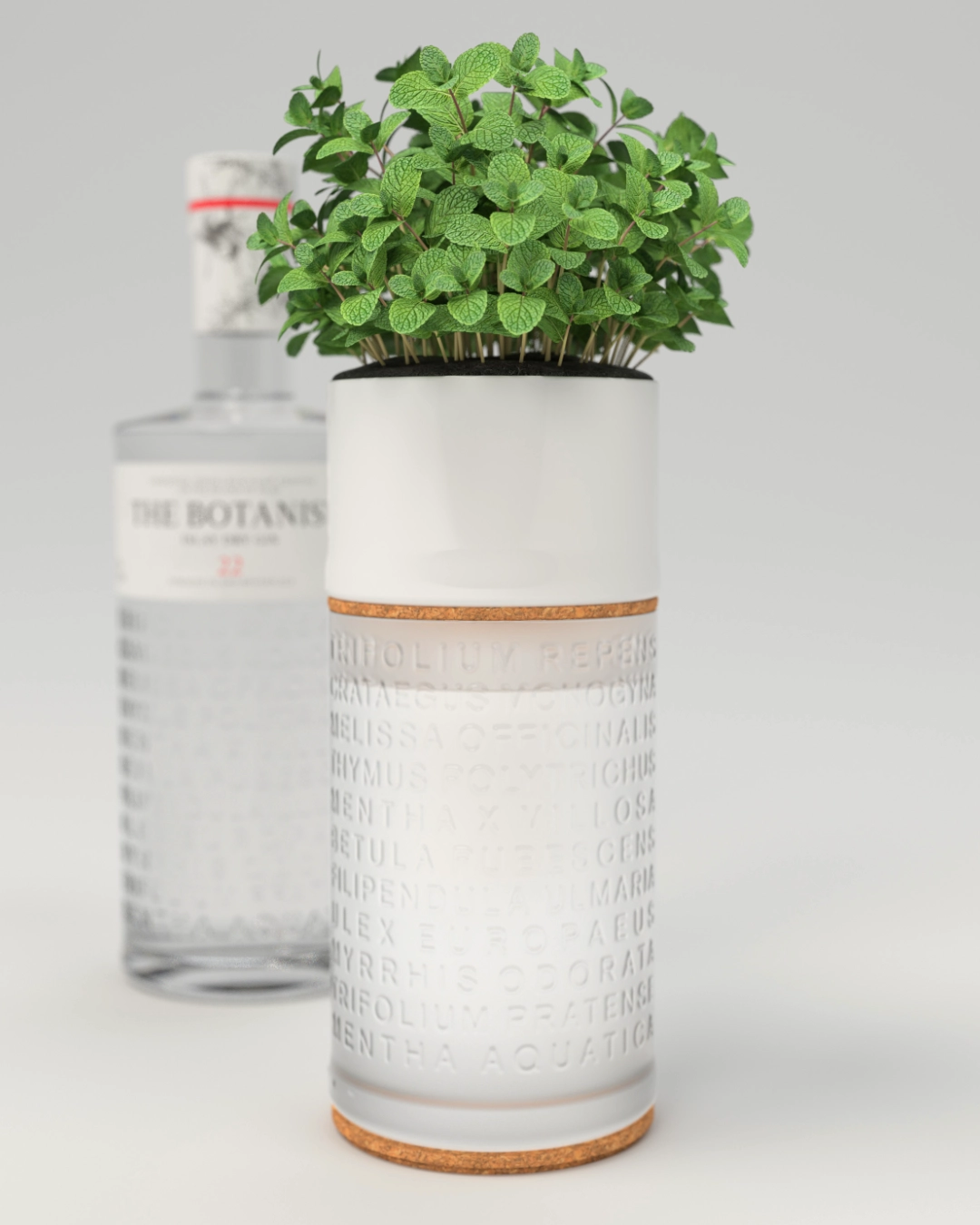
Planter: made from up-cycled Botanist bottles
Herb Planter
A self-watering herb planter cut and finished from up-cycled Botanist bottles, turning empties into a way to grow the kind of botanicals the gin is built on.
View →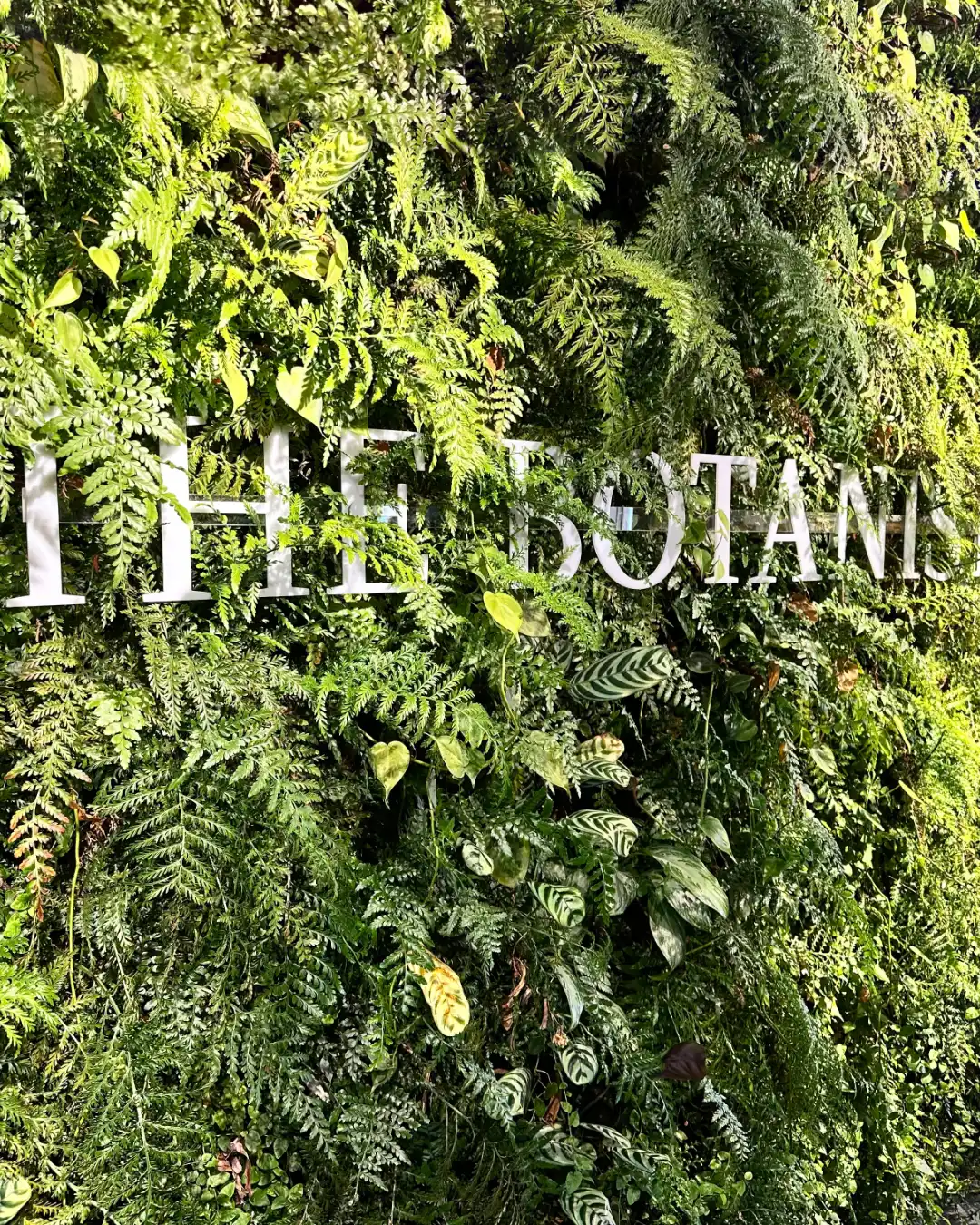
Living wall: foraged botanical installation
Living Wall
A planted living wall built for brand activations, growing a selection of the island botanicals that go into the gin as a living, changing backdrop.
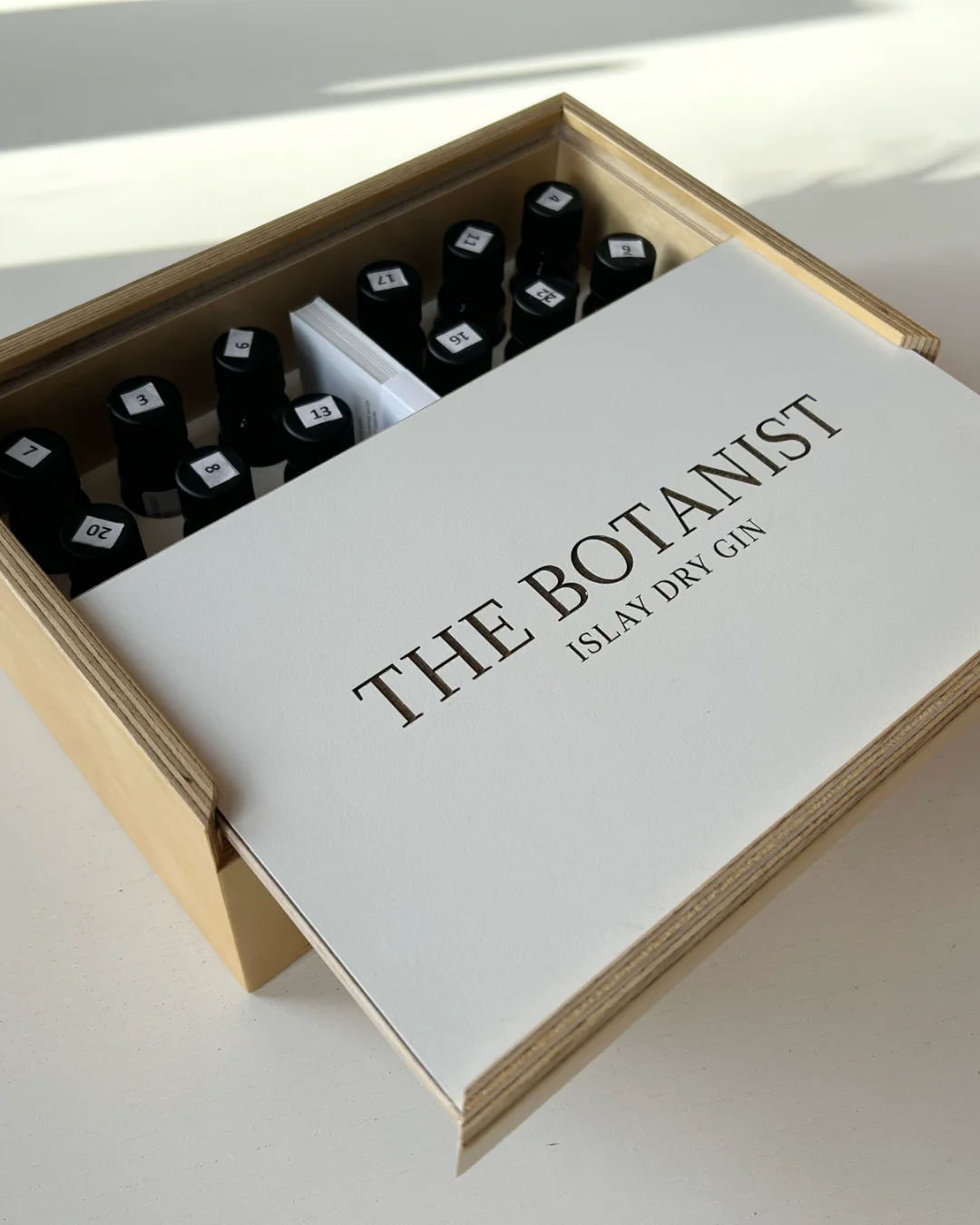
Tincture box: foraging and serve kit
Tincture Box
A foraging-and-serve kit that lets drinkers make their own botanical tinctures at home, extending the brand’s foraging ritual into a physical product.
View →09 / Reflection
What I take from it.
The Botanist taught me that a commerce site doesn’t have to lead with the product to sell it. Building the architecture around cocktails and foraging — the things people actually came for — made the bottle feel like a natural consequence rather than a pitch.
Running the WooCommerce build end-to-end also showed what a brand gains when design and maintenance sit together: the site could move at the speed of the brand’s culture, shipping seasonal moments and experiments continuously. Carrying that voice intact through the Shopify Plus consolidation is the part I’m most proud of — the distinct, cocktail-led world survived the move to a shared group platform.